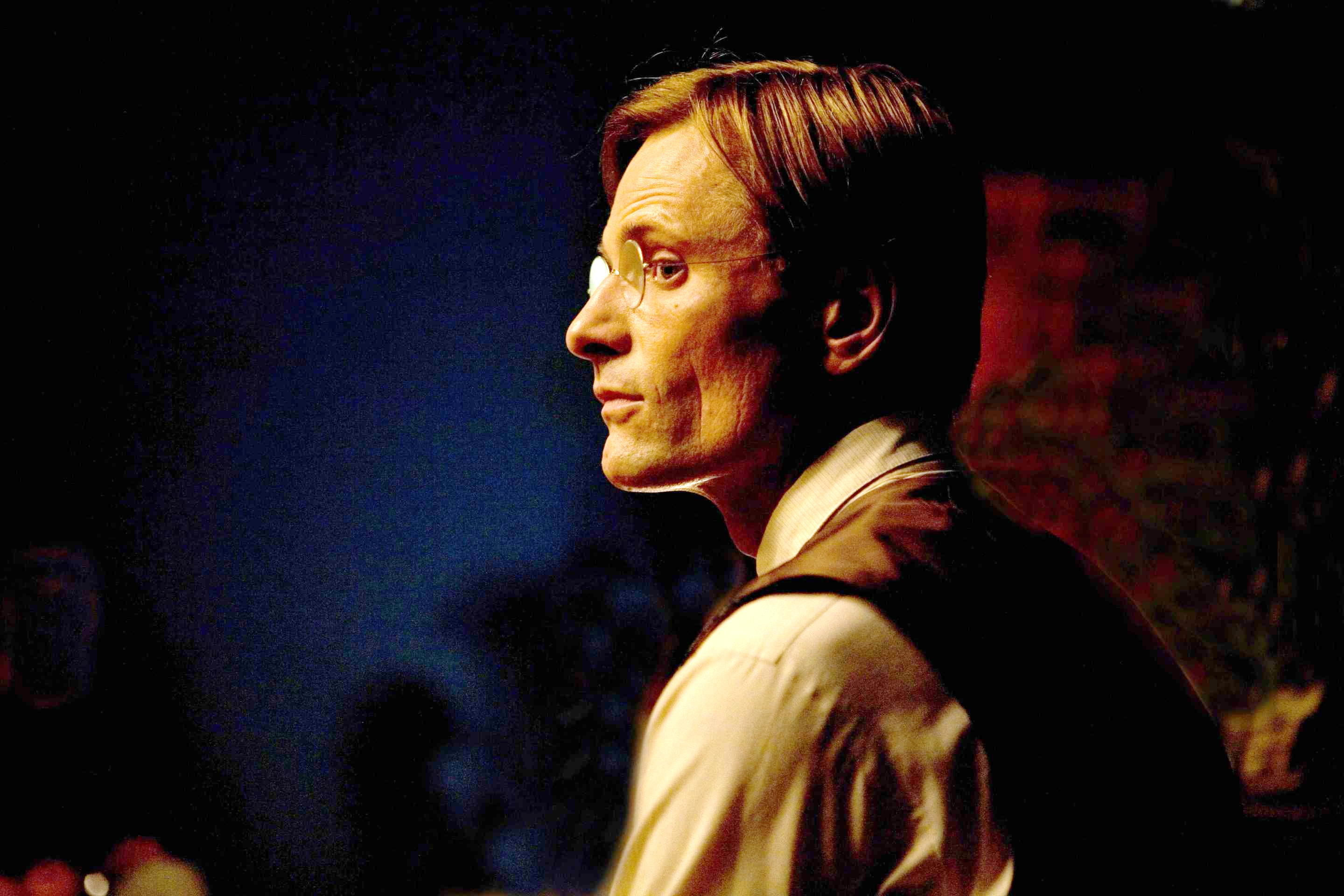
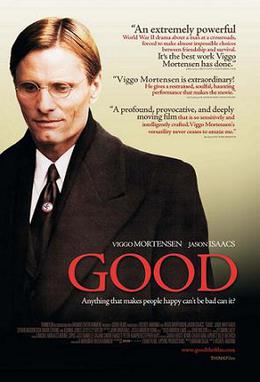
This movie was not released in the United States because it is a movie that promotes anti-patriotic views. John was a character that went with the views of his country, and those views led him to lose everything that held value in his life. It makes you wonder what rights as an American you allow to be contorted so you can live the life you live. The picture is simply a picture of what would be a perfect Aryan couple. This is what John felt like he wanted and needed in life. As it turns out, John ends the movie at a low point in the exact opposite position that he started, completing his parabola.
Friday, September 17, 2010
Is it Good to You
This movie was not released in the United States because it is a movie that promotes anti-patriotic views. John was a character that went with the views of his country, and those views led him to lose everything that held value in his life. It makes you wonder what rights as an American you allow to be contorted so you can live the life you live. The picture is simply a picture of what would be a perfect Aryan couple. This is what John felt like he wanted and needed in life. As it turns out, John ends the movie at a low point in the exact opposite position that he started, completing his parabola.
Wilson Good
I believe the movie was entitled "Good" because of the main character's (John) struggle to be a good person. He is torn right from the beginning by two women and he wants to be good to each of them, but can only maintain one. In his mind, he may have been doing the right thing, the good thing, but the picture presents an example of when he is no longer viewed as good. John's ex-father in law attends the same party as him and his new wife anna, and his father in law condemns him for his divorce of his daughter. Another example of John's desire to appear good is when his friend asks him to buy him a train ticket to Paris. He is confronted by fellow nazi officers at the train station, and he needs to do the right thing and he is torn by the desire to buy the ticket and the desire to stay in good standing with the Nazi Party. He breaks from this desire to by held high in the party when he goes to the prison camp to look for his friend. John chooses right over wrong in this case friendship over naziism and in the end, although clad in a nazi uniform, tries to overcome evil and do good.
Whitlock Good
I believe that this film was entitled good because the main character, John Halder, was always just trying to be a good person. He resisted joining the Nazi party because he didn't believe that it was right, he stayed with his wife when it was clear that he was tired of their marriage not being an equal partnership, and he was always trying to be a good friend to Maurice. It's about his struggle to be true to himself, which is a good person, or be who the Nazis want him to be.
I believe that this film was not distributed in the United States because it sort of shed a light on the Nazi party. This film made it seem like they were just normal people who had families and children and that they were just sort of going through their everyday lives. In some ways that is true, but most of the film did not describe how evil and vindictive the Nazis were. I think that maybe the United States did not want to release this film because they want American people to not see this other side of the Nazi party.
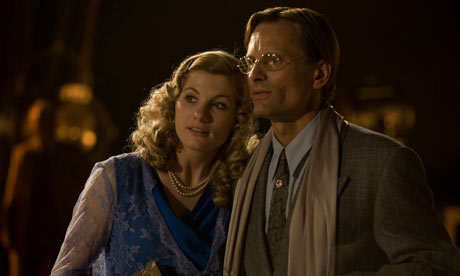
This image from the movie tells a lot about the characters. It is very tightly framed, the characters do not have room to move around, like they are trapped or cornered into being with the Nazi party. Ann is wearing a light colored dress, like she is pure and good, the "perfect Aryan." The shot is pretty personal and it is because we really get a close look into their lives and see what they are like, they really don't have anything to hide from the viewer. The lighting on Ann's face is half light and half dark, which maybe describes her struggle between being good and evil. In the end, she did not help out Maurice and he was sent to a concentration camp. This image is just very telling about two of the main characters in the movie.
Roulakis - Good
I believe the film is entitled “Good,” because it has to do with main character, John Halder’s, fight between good and evil. Because Halder was pressured and didn’t necessarily choose to become a Nazi, we can assume that he is a decent human being. However, his actions later on in the movie contradict the title. As time goes on, although he kept his own personal values, he still became an infamous SS officer and never stayed true to what was actually “Good.” I think the title of the movie is supposed to make us decide whether or not Halder maintained a good person simply because he never changed his personal morals and ideals, or if he was evil because he wasn’t actually being true to himself by still being a part of the Nazi regime. The picture posted is of him and his new wife, Anne, at a Nazi party. In this scene, they are confronted by his ex father in law. I think this picture has to do with the title of the film because again, in this frame, Halder is trapped in so many ways. He was trapped in a difficult marriage, and left his wife and children for another woman, he is a member of the Nazi party. He is a good individual, but his pressured actions show differently.
I don’t think this movie was not distributed in the US due to a government decision. I just think that it was not distributed by the company that made this film because they assumed it wouldn’t do well with an American audience. This is most likely because I feel like American audiences wouldn’t do well with sympathizing with a Nazi, although it is a different point of view, and not a story that we have seen yet in the US.
Cassimere Good
The film was entitled Good because the protagonist of the movie has the idea that he is a good man throughout the movie. In the beginning of the film, he prides himself on his moral values. As the movie progresses, he does not seem to realize that his morals have become skewed since he began working for the S.S. He continues to think that he is not one of the Nazis despite the fact that he has joined the party. He does not fully associate himself with the Nazi Party so he thinks that he still is the same man he was before he joined the party.
The film’s title may also be attributed to the way the meaning of the word “good” is manipulated and changed by the propaganda and ideals put out by the members of the Nazi party. They believe that they are doing the right thing and are contributing to humanity and to Germany. The Nazis also believe that they are above everyone else because of their elite moral and ethical standards; they even go as far as to say that the rules do not apply to them. They continue to push their nationalist, socialist, and anti-Semitic views onto John and he hesitantly buys into it. The more John is around them, the more he becomes like them, and his idea of what is “good” becomes more skewed.
The picture represents a point in the movie where it is apparent that John’s morals have become something other than what they used to be. In the beginning of the movie, he was a loyal and dedicated husband and father who refused to join the Nazi party because of his beliefs and because of his Jewish friend. At this point in the movie he is a high-ranking member of the Party and is married to the woman he had an affair with. He believes that he is still a good man because he did the right thing by his wife and divorced her and made an honest woman out of this lady on the side. In this scene, John is approached by his ex-father-in-law who announces that he fears for the party because of its acceptance of a man with “such moral weakness,” an ironic statement considering the actions of the party. It is shortly after this scene when John is informed that the rules do not apply to him.
The film was most likely not distributed in the United States because it depicts a government that controls the information that reaches its agents and the media, hiding the truth form the majority. The United States government has done this on a few occasions, including the containment of Japanese-Americans after the attack on Pearl Harbor, and the firebombing of Dresden. The United States probably doesn’t want its people to think that their government can easily manipulate them like the Nazi party did to the majority of the German citizens.
Lighter - Good
The film Good takes place in the early stages of World War II. The main character John Halder is stuck in between good and bad, the good being his friendship with Maurice and the bad being the Nazis. At the beginning of the movie, John is presented as a “good” person and family member; he takes care of his children and his ill mother. John changes as the movie goes on, he leaves his wife for another woman and separates himself from his previous life and joins the Nazi life. The picture shows John and his new wife at the Nazi party and represents his new life he is living. This is where his father-in-law first reveals him for cheating on his wife. He criticizes him for pretend to be something he is not and John seems to be very affected by this. I think that the film is entitled good because it shows another side of the Nazis that most people do not even think about. In most cases, the thought of a Nazi is definitely not positive and most people would not even want to think of a Nazi as a good person. This is the main reason I think this movie was not distributed in the United States. Americans do not want to look at a Nazi and think that they were “good” people; most will immediately reject this thought because of the inhuman way getting what they wanted. This movie has a very different viewpoint from most World War II movies, and I think it is quiet successful in doing so.
Lanaux Good
The film "Good" was very impressive in the way it portrayed the Nazi party and how one "good" man could become a part of such a horrible organization. The title obviously refers to John Halder, the main character. He is essentially a good man. He looks after he sick mother, and based on my experience of having a live in elderly grandparent, any man who can do that with patience is a good man. He takes care of his family and is passionate about his writings and ideas, yet his desire to do good, becomes his downfall. He succumbs to the S.S. to further his writing career. Despite him joining the S.S. and cheating on his wife, he still wants to be good, and he wants to help his Jewish friend Maurice.
Thursday, September 16, 2010
Joshua Nguyen Good?
The title Good seems to be used in a sarcastic sense because throughout the movie he seems good yet slowly his desire to be good slowly goes away do to fear and peer pressure. Although he is the main character who should be "good," he is constantly making choices that drives him in the opposite direction. Although his choices and mistakes are humane, he goes down a slippery slope that leads him to a path he originally opposed and despised. One of the most ironic moments in the film is when John's mother tells him, "Who's a good boy? Such a good boy." His mother tells him this after he leaves his wife and joins the party.
A reason the movie may not be distributed in the United States immediately could be due to the fact that the movie seem sympathetic towards a man joining the Nazi party. Americans do not look favorably towards a film that has a hero that can be a described as a coward and a Nazi. Public interest would not favor this type of movie unfortunately. However, recently the movie has opened in select theatres to test its possible popularity in American soil.
The picture is from the moment the audience finds out that John has left Helen and is now with Anne. Helen's father was drunk and made a scene about it. This shows John's progress from a good husband and father to a cheating husband and potentially a bad father. It is the beginning of John's downfall as an ethical human being. However, John is still playing as a "good Nazi." He tends to play aloof with the Nazi party and tries to avoid being a part of it. However, he is given the opportunity to be a good friend to Morris; yet he tries to avoid it as much as possible. The "good" man finally realizes who he is when he puts on the Nazi uniform and tries to change and make amends, but he is too late. He is no longer the good person he was and loses his friend, wife, and mother in the process.
Oria, Good
First off, Good was an amazing movie. Other then this being a good movie, there is not much good in it. It was set in Germany during the beginning of the Holocaust and the war. The whole movie focuses on what it meant to be a good person and what occurred during this time to many German Jews and non-Jews. I believe that the title was based on the many “good” people that were affected during this time period. A lot of good men and women were killed because of their race or religion, one of them being Maurice. He was a good person and a good German. He was born and raised there and he even fought for his county in previous wars. Yet he was still taken to the concentration camp to be slaughtered off with millions of other good people. So it did not really matter whether you were a good person or not, all that mattered was creating a solely Arian race. The title also reflects those who were not Jewish and lived in Germany, mainly the main character, Professor John Halder. From the start of the movie it is obvious that he is a good man. It seems like he has good morals and cares for his wife, kids, friends, and even his mother who with from dementia. He is faced with the difficult task of deciding whether he should stick up for what is right or to stay on the sidelines and do nothing to help. He is fighting an internal battle with himself. He has good intentions and would like to help but I believe he is either too scared to act on any of them. He fears that he will be penalized for aiding the Jews. It also seems like he is suffering from the bystander effect. Throughout the movie whenever Maurice would come and ask him for help, he would just tell him, “wait until things blow over,” thinking that someone else would come and save them. Helen his wife that he separates with in the movie said to John, “you always make the right decision.” Which clearly is not the case because he made the wrong choice almost every time. John stuck with what was convenient and easier.
The picture of John and Anne at the party shows them all dressed up and perfect. They are not who they appear to be. They appear to be the perfect couple and to be very good. When in reality, John has just left his wife for Anne after having an affair with her and joined the Nazi party. If you look, John is dressed all in black and Anne in white. You would assume that this would show how John is evil and Anne is good, when in reality it ends up being the opposite. John is actually a good person just covered by evil, (the black tux). Anne seems to be perfect and a good Arian wife on the outside (white dress) but is truly evil on the inside and a true believer of the Nazi party.
I have no idea as to why it was not distributed in the United States other then maybe the film would cause a lot of controversy. The movie suggests that some of the Nazis were actually just good people forced into killing the Jews. I do not think that many Americans would agree with this. They might argue that there were ways of getting around becoming a Nazi.
I feel like this song is relevant to the movie and what was happening. It talks about how when something bad happens, all of the "good" people are often no where to be found.
Calderon Good
Good impressed me tremendously with the great story and an ending that could not have been stranger. Essentially, Good deals with the main character, Halder, struggling because he is such a good man to his wife, family, students, and friends that people seem to think less of him. He is what society would call a “good” man. He works hard for what he wants and does not want to let anyone down. Notice his wife rarely shows up in the movie because he is always doing the work. He cooks, cleans, and works hard for the family. He is trying so hard to be the best husband, father, professor, and son that he can be. The title hints throughout the movie that good is what he wants to be, but his decisions ultimately lead to his demise. He wants to be this good person like the title says, but he puts so much effort into it that it was just easier to join the Nazi Party. It was most likely not distributed in the United States because it is not a story in which most people would agree with this “good” guy trying to get promoted, so he has to ultimately join the Nazi Party. He is not the hero that Americans look for in movies. He gives in to everything to ultimately get what he wants; however, it does not all lead to his happiness.
The picture relates to the film because it is during the time that Halder is starting to go downhill. He starts at the beginning of the movie as this great guy, but here he is pictured with his new girlfriend Anne. According to the frame shot it is personal with a medium close-up. The frame is off to the left more, so Anne is more in the middle than he is suggesting she is the focus of the picture. She is what is new in his life and she is what he is thinking of at the moment. He seems very protective of her. She is what the eye captures first in the frame shot which just enhances how she is the attention.
Mcgowan Good
I'd like to start this blog by saying that the movie Good really impressed me in so many ways. I honestly cannot think of one GOOD reason why it wouldn't be distributed in the United States, besides the possibility of the title in relation to Nazi Germany. In my eyes, it is hard for some Americans today to distinguish between what is good and what is bad. Maybe it was ultimately decided that this film is too much for our country as a whole. I think that is a sad notion. I figured out why it was titled "Good" after watching a couple of scenes. It is clear that John Halder is the image of what most societies would consider a good person, inside and out. He is putting up with a lot of things that he should not have to deal with when the movie opens. For example, he is dealing with his terminally ill mother. I happen to know from my mother's personal experience with my grandparents that it is not easy to take care of someone like that. Therefore, it is extremely honorable of him to take care of her. On top of that, he is taking care of his three children and a lazy wife who he is clearly no longer in love with. He also stays true to his beliefs (for a while, at least) by keeping contact with his jewish friend, Maurice and resisting his father in laws pressure to join the Nazi party.
Motsinger--It's All GOOD (to the untrained eye)
Leary- GOOD
After watching the movie Good, I realized that the title of the movie had everything to do with the main character, John Halder. Throughout the movie, John seemed like a very “good” guy. Instead of putting his mother in a retirement home, he let her stay at his house where he was constantly babysitting her because she told him she didn’t want to stay at a retirement home. He was a “good” guy to take care of her when he had so many other things to deal with. Also, at the beginning of the movie, John stayed with his wife and kids in order to not break the family up even though he didn’t seem happy. And another main reason he was portrayed as a “good” guy was because he risked his job and the power he had to attempt to buy Maurice a ticket to Paris. All of these reasons didn’t seem good enough when it all came down to it. Even though he seemed to have a big heart and to genuinely want to help the people he loved, he failed them in the end. He put his mom in a house alone, where she tries to commit suicide. He leaves his wife and kids for a younger, Nazi-loving woman that betrays him in the end. Maurice gets taken to a concentration camp and probably killed because John couldn’t get the ticket to Paris.
All of the things he did as a “good” person turned around on him because he was too obsessed with the power he had being apart of the Nazi party. He went from being someone that wanted to help others to a person who would fail others just to be on top. The whole movie tosses you back and forth deciding whether or not John is a good guy or not.
This picture pretty much seems to sum up this film. The picture is a very tight frame where it looks like John and Anne don’t have much room to move with a lot of people crowding in the background while they are in the foreground being the main focus. They are both in the dominant, central position that also makes them the main focus. This picture shows an open shot since it is a very realistic view. The lighting is used with both high key lighting and low-key lighting on their faces that might show that there is a good and bad side of both of them. This is why this picture seems to represent the film very well. Throughout the movie, John is constantly in a tight position. It could be a difficult position on whether or not he should leave his wife, get Maurice that ticket, quit the Nazi party, or many others. The reason I brought up the lighting in the picture was because it makes these characters seem to have two sides to them. John, with being apart of the Nazi party while his best friend is Jewish but also being a decently “good” guy throughout the movie. Anne, with being a “good” person by sticking by John’s side through everything and seeming to be a kind-hearted individual but also turning on John when she calls the police when Maurice shows up at the house looking for help. Both the characters are caught between these two sides.
Finally, the reason I don’t think the movie Good was distributed in the United States was maybe because of how the Nazis were portrayed in the film. The movie showed how the Nazis lived their day-to-day lives, going to parties and acting like nothing is wrong. Watching this movie from the Nazi point of view, it almost wants you to believe there is nothing wrong with how they treated Jews. Americans view Nazis as horrible people for what they have done, but this movie makes it seem like they are normal human beings that are doing nothing wrong. This also could be why the movie is titled Good. Maybe the title comes from not only the debate of whether or not John is a good person, but all Nazis together.
Rivera Good is in the Eye of the Beholder
Wednesday, September 15, 2010
Brennan Good
Farris: Good

The title “Good” is appropriate for this movie because it portrays the story of one good-hearted man who becomes unintentionally wrapped up with Nazi happenings. It proves the point that good people are often steered in the wrong direction, in this case due to the fear of what the consequences would have been for speaking out openly against the Nazi regime. Professor John Halder, as portrayed by Viggo Mortensen, always put others before himself: he looks after his dimensia-stricken mother, and sticks by an eccentric, uninterested wife for the sake of his children. Halder’s book about euthanasia is made into a propaganda film by the Nazi Party promoting the eugenics program, which earns him an honorary Nazi title that he doesn’t take too seriously at first. His best friend Maurice, a Jewish psychiatrist, warns him about becoming involved with such tyrants, to which Halder disregards by saying, “They like to have a few academics around to give them the veneer of sophistication.” This opinion soon changes though, as Halder becomes power hungry and rises up in the Nazi world; he even begins wearing a Nazi uniform. Becoming associated with the Party is the first of many small decisions that Halder makes that leads to the devastating finale of the movie in which he sees an emaciated Maurice in a concentration camp.
This movie’s goal is to make people think about how they would react when put in such a situation: when what you know is right is against the popular belief of an entire nation.
The image presented is important because it suggests a message about people not truly being who they appear. This is done through the use of contrasting color values. John Halder is dressed in black, a color of evil, although we learn throughout the movie that deep down he was “good” person, and didn’t intend to become affiliated with Hitler’s regime. Anne Hartmann on the other hand is dressed in white, a color of pureness and innocence, when really she is an evil Nazi sympathizer.
The reason I think this film wasn’t released in the US is because of it’s unique message about not all Nazis being downright evil. I don’t think this idea would sit well with American audiences, who prefer to view Nazis in a much more devilish light.
Curtis: Good Germans Go Bad
Tuesday, September 14, 2010
McElvaine Good
Why is the film entitled GOOD, and why do you think it was not distributed in the United States? Look at the picture and comment on what the picture has to do with the title of the film comment on what the picture has to do with the title of the film.