Showing posts with label Traffic; War on Drugs; Cartels. Show all posts

Friday, November 19, 2010

McGowan Traffic


It is painfully obvious that our country's war on drugs will never be won. Perhaps they should stop and consider Albert Einstein's definition of insanity: doing the same thing over and over again and expecting different results. As we take a peek at the Mexico story with the Tijuana cartel, we learn that this war could never win on a political level. The reason being: By taking down individual cartels, we are really strengthening others. Therefore, it is pointless. These cartels are far too numerous and potent for us to infiltrate. The reason that these cartels are so potent is because of their financial status. At one point, we learn that the cartels far exceed the budget of the war on drugs. They are also potent in the fact that they are violent and dangerous. It is a shame that American officers have been killed by the cartels over a war that will never be one. Another problem with this war is it's utter lack of secrecy. It seems that the war on drugs is doing the equivalent of an army broadcasting it's tactics before a battle. The cartels, on the other hand, are able to operate in a sly secrecy that hinders the US from keeping track of them. For instance, Robert Wakefield is told that the head of the Juarez cartel has died, basically marking the end of the cartel. We later find out that this is not true and that the Juarez cartel has actually grown stronger.
There are a few techniques the director used to highlight the futility of the war on drugs. It seems to me that the camera was always in a personal view of Robert Wakefield. This personal angle seemed to show his helplessness in the war on drugs. He always seemed to be insecure in what he was doing. The angle used in scenes in which General Salazar were shown often looked up at him to show his confidence and power. If you contrast these two frames, it seems as though General Salazar is a bully looking down at Robert Wakefield. I think that this is a good representation of the way that the cartels seem to look down on our war on drugs.

Thursday, November 18, 2010

Whitlock Traffic

The war on drugs has been going on for so long and the underground, secretiveness of it all is so widely spread that I just don't believe that it is winnable. No matter what, people will find a way to get drugs because the people responsible for bringing the drugs into our country have so much money, and as we know, money is power. Individually, the people responsible for drugs coming into America, will never allow their source of money to be stopped. They would do anything to keep the drugs coming into the country. Because of this, the political side just doesn't stand a chance. The people with money will find a way to get around the government, because for them it is worth the risk. Socially, drugs are seen as a problem in lower-class neighborhoods. I just don't believe that the people with money in America see this as an everyday issue because they don't believe that they are around it. However, as we see in the movie, that is not true.
An example of how the war on drugs is not winnable is when Mrs. Alaya goes to the drug lords and shows them the doll made of cocaine. Before, she was appalled at the fact that her husband was responsible for such acts, but then she is doing them herself. She gives these people a way to be even more secretive and get away with more. In this scene, it is clear that she feels empowered. Even the most innocent person at the beginning of the movie was willing to do that for the love of her lifestyle. In later scenes, Mrs. Alaya has one the DEA guys killed and the only witness to her husband's case killed. She was willing to cross the line socially, politically, and independently in this movie. That is why I just don't believe that the war on drugs is winnable.

Calderon Traffic


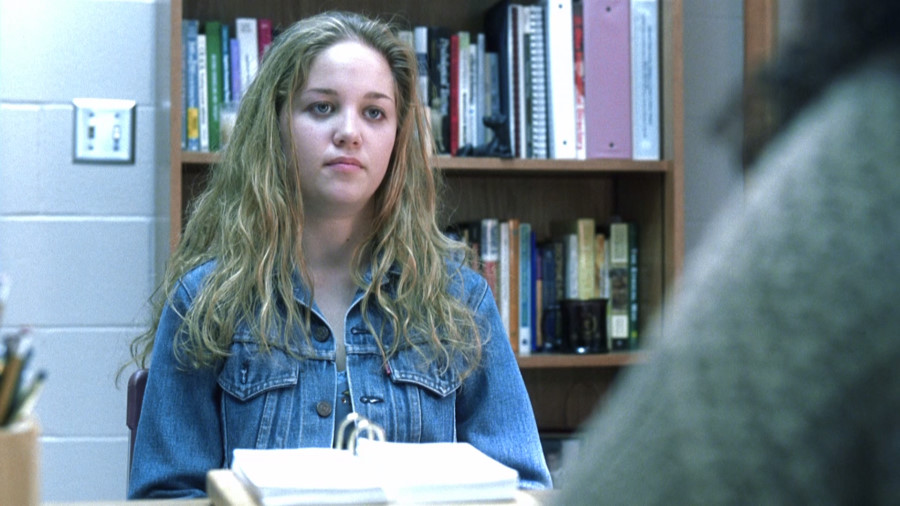
The war on drugs I believe is winnable individually because it is up to the individual to overcome their own drug habit. The individual is the one that brings about the drug addiction; therefore, they are the ones that can get better. For example, in the movie, Caroline has a very bad drug addiction and she is only sixteen years old. She hides everything from her parents and never let's them in, but what she really needs is some attention. In the end it is up to the individual and the family's support to get them through it. Caroline never got better until her father took some time off to actually pay attention to her and help. In the end she needed to realize what she was doing to herself and get herself some help. So the war on drugs is winnable if you want it to be. There is a way to stop it and it starts with each person. Specifically the scene in the end when Caroline is speaking in front of her rehab group she says she can handle it a little everyday. That is exactly what attitude people need or else they will never win.
Caroline felt individually alone and all that she needed was her family to get better. Her father needed to realize that his support would help his daughter. It is not until it is almost too late does he go and help her. He thought the whole time that the war on drugs would be stopped by the government, but he didn't realize that it first starts at an individual level.