Showing posts with label Good Night and Good Luck; Cinematic Techniques. Show all posts

Saturday, October 9, 2010

Lighter - Authentic 1950's


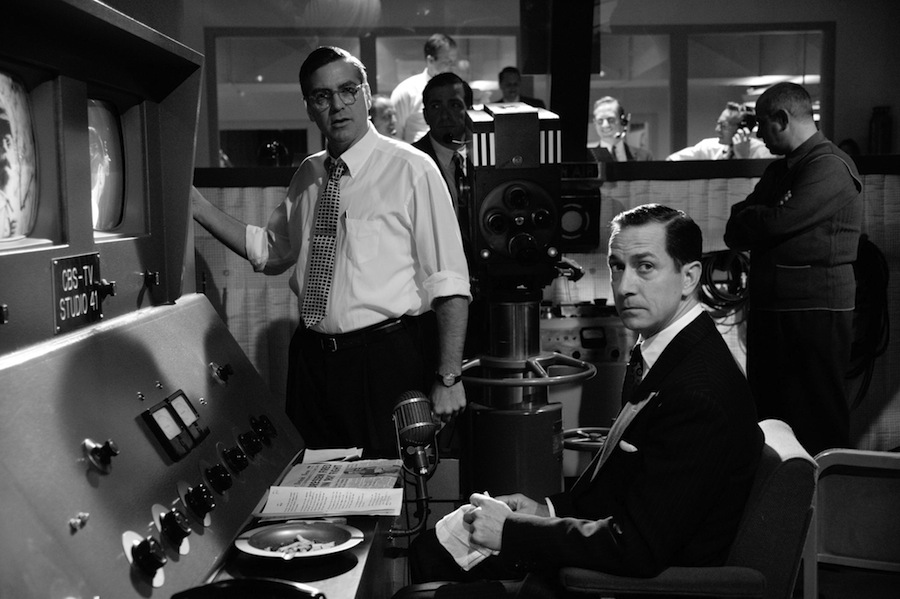
George Clooney’s movie Good Night and Good Luck uses a authentic 1950’s feel by using black and white, close ups, and only indoor shots. Clooney originally shot this movie in color and later switched it to black and white. The black and white effect is a realistic attribute to this film because in the 1950’s all film was in black in white. The choice to do this was very influential to how the viewers experienced the film, it gives the viewers authentic feel and it blends well with real footage from the 1950’s. The dramatic close ups were also an important part of the viewing experience; they added a stressful or intense feeling to the film. The viewers can feel “closer” to the film with these close ups because of the feeling it makes someone feel as the camera slowly moves closer to the speakers face. Finally, the indoor shots are another authentic part of the film. This time period is the beginning of television, which also means they are using the first video cameras. A trend in technology is that everything when it first comes out is quite large and was not easily moved, which is why there are no outdoor shots, because the transportation was simply not easy. Overall, the general feeling all this effects has on a viewers is a very authentic 1950’s feel with a intensity that keeps you on the edge of your seat waiting for what will happen next. I enjoyed the film because of the authenticity and because of the differences from other films made in 2005. I find this film to be more interesting because of how authentic it is, if it was in color the feel of the movie would be unnatural and would not be as enjoyable.

Wednesday, October 6, 2010

Woodall Good Night, and Good Luck


Although I believe the plot and overall structure of Good Night, and Good Luck was slightly anti-climatic and left more to be desired, the cinematic techniques boosted the film tremendously. First, director George Clooney’s choice to shoot in black and white sets the period and really proves just how much actor David Strathairn resembles Edward R. Murrow. It also symbolizes the clear division between the two factions: Murrow’s team and McCarthy.

The black and white also exaggerates the high contrast lighting used throughout the film. The bright whites mixed with the brooding dark shadows induce a sense of uneasiness and tenseness, which was how Murrow and the nation as a whole felt during the McCarthy trials, and how I felt watching. Black and white film heightens this stark contrast; color would only blend together and deemphasize the contrasting light and dark.

Finally, the use of close up shots throughout the movie brings the audience in and makes us feel a part of the action, not just spectators. We are able to see the expressions of the characters in detail as react to different events. We are able to see Don Hollenbeck unsuccessfully hide his anguish as he listens to the poor review of his show; we see Murrow’s determination when he is fighting for the initial chance to confront McCarthy; and we see Murrow’s subtle satisfaction after the end of every show. These close ups give us an opportunity to really feel what the characters are feeling instead of having to told through dialogue or other techniques.

With all its short-comings, the cinematic techniques Clooney employs bring Good Night, and Good Luck into the upper echelons of film.