Friday, December 3, 2010

Rivera: Easy Rider


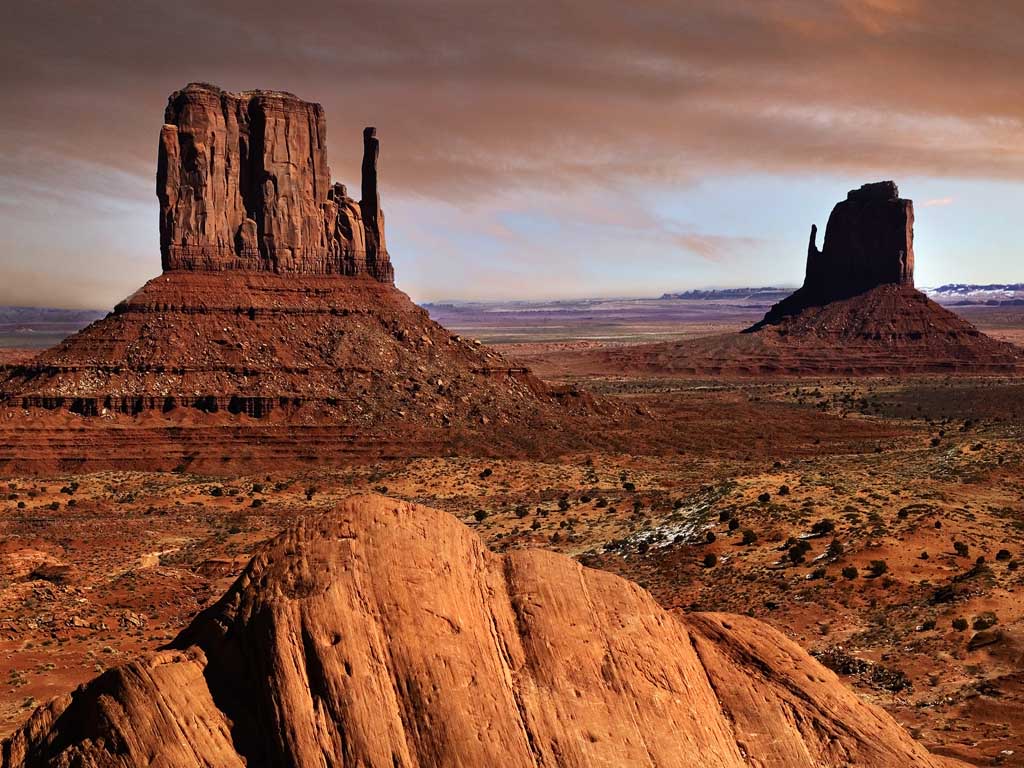
Ahhh...Easy Rider. The film that reminded Americans what should be important in life; freedom and equality for all men. The freedom to live a life without being imposed upon by "The man" or governments telling you what the norm is and how one should live his life. Okay, I realize this is slightly exaggerated, but the point is still certainly there. With words, its not as easy to explain what the characters in Easy Rider were riding away from, unless it is told through an exaggeration. That is what George Hanson is getting at when he discusses the aliens that live among us. Hanson describes the society, from which the aliens come from, as being highly sophisticated and advanced; there is no form of government, they rule themselves and have no worry of war or hate, and are completely self sufficient. Hanson is obviously eluding to what he, as well as Captain America and Billy and those similar, are aiming for. They want a life that is based on love; one can see this film is influenced by the Port Huron Statement of 1962. The most common way the film displays this message is through the use of wide camera shots of the vast, natural, terrain that the characters pass by on their journey. The film's cinematography glorifies natural landscapes to show how beautiful it all can be. The scene that I feel is most important as far a mise en scene is concerned, is a scene where Captain America is standing alone on the side of a road; he is standing in some grass and one hand is outstretched touching the grass. At one point the frame is focused on only his hand and the grass (not marijuana grass as would be believed due to the rest of the film). So, the shot includes: hand, grass, backdrop being natural desert terrain. This is very symbolic of the nature of the film because it shows man finding simple beauty in a very natural setting. The frame is intimate, allowing only these three elements of focus. Despite the intimate framing, the density of the shot does not appear to be cluttered, or remains a low-density shot, which allows for the feeling of freedom to remain. The shot takes place during the day so it is brightly lit, keeping the moment of discovery and "naturality" real. As you can see, this scene exemplifies all of the elements that can be found throughout the film, and it is done not with words, but with an image, as is most of the film.
Turner State of Play


Privacy is necessary for democracy to flourish because democracy is government by the people. If people cannot protect their privacy from the government because they do not have the power to do so, then the citizens don’t have freedom. The United States is founded on allowing citizens to have freedom. Being watched or tracked by the government, and not having privacy, shows that the government and corporations have an undemocratic power over individuals.

State of Play had the rhyming element of helicopters. The helicopter at the beginning of State of Play shows how Point Corp is able to keep an eye on everything. The helicopters are shown above, giving a feeling that people have no control over the surveillance company. Also at the beginning of the movie, we see Sonia walking, and it looks like someone is hiding and watching her. This proves to be true. We later find out that PointCorp was behind what happens to her. When Collins is at the press conference after finding out what happened to Sonia, he breaks down crying. Immediately the press goes crazy and rumors begin that he has had an affair with Sonia. Just because of this, his image is ruined and he won’t be known for what he did for the country. All of these first scenes are related to privacy. Sonia is being tracked and has no privacy which leads to her death. Initially Sonia was sent to spy on Collins by PointCorp. Collins, is a political figure and is often in the media, and therefore has no privacy.

thompson trainspotting


Life as we know it is done of our own choices and decisions. These decision and choices reflect how we live the rest of our life, but we have to power to change our future. We have the power to become and strive for the things that we truly want and want to become in life.
In the movie Trainspotting we meet four boys who are addicted to heroin. These boys proclaim and accept that they have chosen a drug over life. A life that could have been filled with goals and aspirations. The drugs gives them a temporary and artificial fulfillment. This fulfillment replaces the realities of life. This drug is also an excuse for them not to deal with society and things such as work and family. At the house where the boys would get high, there was a girl who lived there. We see her transition as she becomes more involved with heroin. We see as time continues on in the drug house, there is always a baby present. The girl ,who is the mother of the child, becomes an addict. The boys are awaken by her scream as she finds her abandoned baby dead in the crib. Personally, I thought that this was going to be the scene where everyone gives up heroin or the movie then goes into another direction. Not only did the movie not change directions, but Renton and the mother both take another hit of heroin to "take away the pain". The political message in this film is that we all have the same opportunities as the next person and sitting around blaming things like the government will get us nowhere. Renton and his friends all had their own justification about clean life and/or their life paired with heroin. The catch is, no one ever tried to change their own destiny.

In this scene, Renton is justifying again. Diane is a person who would be truly genuine to Renton. On their first night, she proclaimed to him how he truly was (in a manner of a plan to be with him) and he absolutely feel for it. In this scene, Renton looks uncomfortable but with still passion in his eyes. Renton truly likes Diane, but justifies his reasonings for why they can not be together. This shows how in Renton's world he wants things, he wants life but like everything else, he pushes them away giving his reasons for why things can not happen, and not once did he blame it on himself.

Armentor State of Play


The corporation as an economic entity can become so powerful that its influence stretches into politics. Many systems of government rely on corporations, for instance the United States found corporations to be so vital to the country's success that in recent years the government began bailing out or buying out corporations to ensure their stability. Fascism, although a brief but influential stain on modern history, was rooted in ideals of Corporatism. As it is clear how vital corporations are to governments, let us look into how they fit into the world of State of Play. The suspect and all-powerful corporation in the movie is the defense contractor PointCorps. As may be the case with most corporations, PointCorps' lust for mad profit ensured their decline in morality because of their malicious means of attaining such profit. PointCorps intent of monopolizing the countries whole defense and surveillance system is a telling example of the dangerous powers that a corporation could attain. For by definition, the corporation can act as an individual, excusing the parties in power of liability, thus harboring a culture of ego that translates into nefarious deeds. PontCorps feels such political immunity that they even utilize the work of assassins, a bold move blinded by greed. If one thinks that these ideas of corporate control of politics only exists in fiction, they need look no further than last years Supreme Court case that made these issues far more relevant. As of last year, corporations can donate an unlimited amount of money to politicians and their campaigns. The downfall of this is clear...corporations will no doubt increase lobbying and cash flow to politicians who will suit their interest. This move by the Supreme Court compromises our democracy because it turns the common voter into an irrelevant entity, why suit the interest of a community when you can bankroll off of the interest of a corporation?

Curtis, "Don't ever tell anybody that they're not free."


The political message of the 1969 film Easy Rider is that true freedom can only achieved by those who allow themselves to simply be. The pseudo-philosophical musing is totally appropriate when pondering the scene in which Jack Nicholson's character George Hanson notes, "This used to be a hell of a good country. I can't understand what's gone wrong with it... They're not scared of you, they're scared of what you represent to them... What you represent to them is freedom... It's real hard to be free when you are bought and sold in a market place." What Hanson's spiel means is that Americans talk about the value of freedom everyday, but rarely do we ever honestly exhibit our liberty. The United States National Guard broke up anti-war movements in California, the Vietnam War has been going on for five years, and there's been a draft lottery. The year 1969 was the perfect opportunity for Americans to showcase their democracy and liberation. But with our own government reprimanding us for speaking against its injustices, it is understandable why someone would be afraid of living to their full, free potential.

In the scene, Hanson and his new buddies Wyatt and Billy are shrouded in darkness, only lit by the minor, warm light of the campfire. There is only the diagetic sound of the campfire crackling, the animals roaming about in the wilderness around them, and the heavy breathing of Hanson and Billy. The soundtrack is simply the bare necessities because there needs to be an emphasis on Hanson's words. And there cannot be any emphasis; it needs to be natural. Music and other nondiagetic sounds influence the viewer far too much, and since Hanson is blatantly stating the political message of the film at this point, the track needs to be clean. Also, the dim lighting shows the raw honesty to the scene. Any scene can be done in hyperlighting to make it flashy and extravagant, but that was not the point for this scene. There needed to be a focus on the sincere meaning of Hanson's words and of his character. Had we seen Hanson share his thoughts in the daylight of the following scene, his words would have meant much less. Lighting can really change how perceptive an audience is to a certain scene. The emotion in this particular scene required the audience to feel trusting and empathetic towards the trio, hence the low light.

All in all, the film spotlights the imbecilic nature of the people who do not like Billy and Wyatt. The people that are afraid of the rebellious Wyatt and Billy are ignorant and violent. They are from small, rural, Southern towns in Louisiana and Florida. They are what would be known as rednecks and hillbillies. They are usually men, "free men", who make homophobic and racist comments at Wyatt and Billy for no good reason.

Thursday, December 2, 2010

Motsinger-- Easy Rider


Riding down a highway in the middle of the country, Wyatt (A.K.A. Captain America) and Billy the Kid leave New Orleans to continue their journey and try to get away from the idea of George Hanson's death. Unfortunately their journey and lives came to an end before they and the viewers of Easy Rider were ready. Two hicks driving a pick-up truck and wielding a shotgun killed both Wyatt and Billy for an irrational reason: they were different.
My blog has two pictures attached to it to compare and contrast Wyatt's, Billy's, and George's idea of freedom with the pick-up truck hicks and the hicks who killed George. Both views agree that freedom is a good thing, but Wyatt and his companions are much closer to understanding the true definition of freedom-- being able to dress, think, speak, and act in ways that are comfortable for the individual. The hicks seemed like they were probably farmers, or at least some sort of blue collar workers who would agree with Thomas Pain's quote "that government is best which governs least," but they still do not understand the full implications of freedom. Freedom allows the individual to express himself or herself in positive ways, but in return may seem different and uncomfortable for surrounding persons. This means in order to appreciate true freedom, one does not have to agree with another person's point of view, but it does require a person to tolerate, to a certain degree, said point of view.
As far as mis-en-scene and character appearance, it is interesting that Wyatt wears a leather jacket with the American Flag on it and drives a motorcycle with the American flag on it as well. The director tied Wyatt's calm and all around good personality with the director's view of how a true free American should act. One may notice the heavy shadow, as well as the pitch black shirt on the hick holding the shot gun; both of which could represent the malignant, dark, and violent traits that create and nourish ignorance within the mind and soul of human beings.


McElvaine Trainspotting


The political and social message in the film, Trainspotting, is that people will use any excuse to victimize themselves and to justify that victimization. The film centers on aWho group of men who blame their addictions and problems on the state of their country and the town in which they live. Throughout the film, the men say that they have nothing better to live for than heroin. The film is kicked off with a narrative from Mark Renton saying, "Who needs reasons when you've got heroin?". Later in the film, Renton says that he hates being Scottish because they are "the lowest of the fucking low, the scum of the earth, the most wretched, servile, miserable, pathetic trash that was ever shat into civilization." All of the addicts in the film have lost faith in their government, in society, and in each other and the only thing that they can count on is heroin.But, rather than striving to make changes in their lives they choose a stagnant, poisonous state of being and blame their situation on their surroundings. Mise en Scene is used to portray this sense of being trapped on many occasions throughout the film. A specific example is when Renton overdoses on heroin and hallucinates that he has sunken into the carpet. For the remainder of the scene, we see Renton's world with red carpet lining either side of the shot to symbolize Renton's detachment from the world.

This film does impart somewhat of a positive message to its audience, however. The film leaves the audience with the knowledge that they have the power to choose life. We all have the option of choosing a family, a job, a future, happiness, and that if we choose drugs and addiction we are choosing to become victims.